
Working in Saudi Arabia: work visas, Premium Residency and Vision 2030
Updated August 2026
Saudi Arabia is hiring at scale for Vision 2030 projects, salaries are tax-free, and labour reforms have loosened the old sponsorship system. Residence still depends on your employer unless you buy into Premium Residency.
Quick answer
This guide covers 3 main routes into Saudi Arabia for work or residence. The primary one is the Standard work visa (iqama) route, with a processing time of 4–10 weeks. A one-bedroom in central Riyadh costs about $900 a month, against an average net salary of $1,900. The requirements, fees and timings below are a snapshot reviewed on August 2026 — Saudi Ministry of Foreign Affairs is the authority that decides.
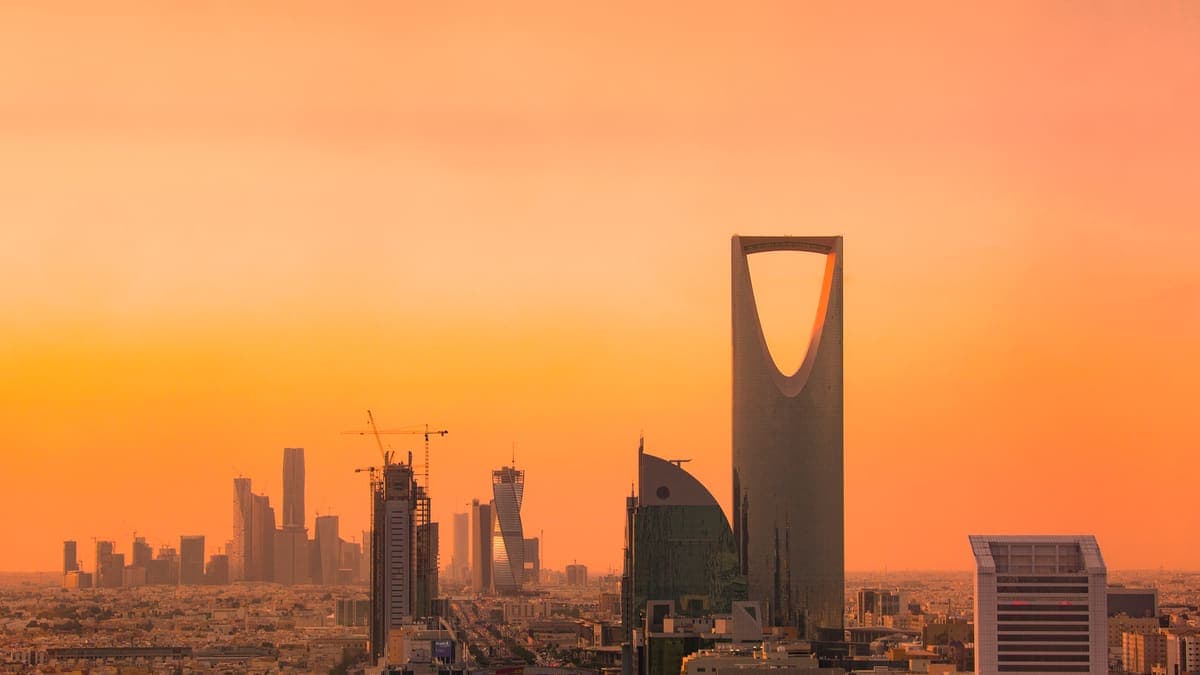
At a glance
Rent, 1-bedroom (centre) — Riyadh
$900
Average net salary — Saudi Arabia
$1,900
Processing time — Standard work visa (iqama)
4–10 weeks
Your employer applies for a block visa, then a work visa, and you complete medical and biometric steps before travel. Since the 2021 Labour Reform Initiative, workers on a valid contract can transfer employer, obtain exit and re-entry permits and travel without the employer's consent in defined circumstances — a substantial change from the older kafala arrangement, though not its complete removal.
Main visa routes
Standard work visa (iqama)
Anyone with an offer from a Saudi-registered employer, who handles the block visa and converts it to an iqama after arrival. Renewed annually alongside your contract.
Premium Residency
Investors, entrepreneurs, exceptional talent and property owners. Grants residence without a sponsor, the right to own property and to run a business, in limited or renewable annual forms.
Visit and business visit visas
For interviews, meetings and short assignments. These do not permit employment — working on a visit visa carries penalties and deportation risk.
What you need
- Degree attested by your foreign ministry and the Saudi embassy
- Medical examination at an approved centre before travel
- Police clearance certificate
- Professional accreditation for engineers, doctors, nurses and teachers
- Employment contract registered in the Qiwa platform
- Mandatory health insurance arranged by the employer
Residency & legal framework
Permanent residency
There is no ordinary route to permanent residence through employment. The iqama is renewed annually and lapses when your job ends. Premium Residency is the only durable status available to most foreigners, and it is purchased rather than earned through years of residence.
Citizenship
Naturalisation is discretionary and exceptionally rare, granted by royal decree to individuals with distinguished expertise. No number of years of residence creates an entitlement. Plan on the basis that you will not naturalise.
Legal rights
- Employer transfer is permitted after your first year, or immediately if the employer breaches the contract.
- Exit and re-entry permits can now be requested by the worker directly.
- Family sponsorship requires a qualifying job title and minimum salary.
- Your passport is legally yours — an employer holding it is committing a violation.
Labour law essentials
- 48-hour week, reduced to 36 during Ramadan for Muslim employees.
- 21 days of annual leave, rising to 30 after five years of service.
- End-of-service gratuity accrues per year worked and is paid on departure.
- Wage Protection System monitors salary payments; report non-payment through Qiwa.
Cost of living breakdown
Monthly averages for one person in Riyadh, in US dollars.
| Category | Per month |
|---|---|
| Rent, 1-bedroom (centre) | $900 |
| Rent, 1-bedroom (outside centre) | $600 |
| Groceries | $250 |
| Utilities | $130 |
| Health insurance | $110 |
| Public transport pass | $40 |
| Internet | $60 |
| Core monthly total | $1,490 |
Job market & qualifications
High-demand industries
- Construction and giga-projects — NEOM, the Red Sea, Qiddiya, Diriyah
- Energy, petrochemicals and the renewables build-out
- Healthcare, with continuous demand for nurses and specialists
- Education, particularly English teaching and higher education
- Technology, finance and tourism under Vision 2030 diversification
Degree recognition
Attestation is the gate: your degree must be verified by your education ministry, your foreign ministry and the Saudi embassy before a work visa issues. Engineers register with the Saudi Council of Engineers, health workers are classified by the Saudi Commission for Health Specialties, both of which take weeks and should start before you sign.
Average wages
Salaries are tax-free, which makes headline figures deceptive in your favour — but check what the package includes. Engineers earn SAR 150,000–260,000 a year, nurses SAR 84,000–132,000, teachers SAR 96,000–168,000. Housing and transport allowances are often separate line items worth 25–30% of base pay.
Life quality: pros & cons
Housing market
Rent is usually paid annually in advance, which is the biggest cash-flow shock for newcomers — budget for a full year up front unless your employer provides housing or an advance. Riyadh and Jeddah compounds cost considerably more than local neighbourhoods but offer different living arrangements.
Language requirements
Arabic is the official language and dominates government, healthcare administration and daily life outside corporate settings. English is standard in multinationals, healthcare delivery, engineering and the giga-projects.
Integration tips
Absher and Muqeem are the government apps that run your residency, exit permits and dependants — set them up immediately. Social rules have relaxed considerably in recent years, but they remain more conservative than the Gulf's smaller states; read the current position rather than older accounts.
What works
- Tax-free salaries with allowances that often add 25–30% on top.
- Enormous hiring volume across the Vision 2030 project pipeline.
- Labour reforms have materially improved worker mobility since 2021.
- Arabic speakers face no language barrier at all.
What to weigh
- No path to permanent residence or citizenship through work.
- Residence ends with the job, and dependants' status ends with yours.
- Annual advance rent is a heavy up-front cost.
- Saudisation quotas restrict foreign hiring in a growing list of roles.
Photo credits
- Riyadh — B.alotaby, CC BY-SA 4.0
In-demand jobs here
- Project engineer
- Staff nurse
Compare living costs with your country
Moving to Saudi Arabia: cost comparisons
How the cost of living in Saudi Arabia compares with the countries people most often move from.

Other guides in Gulf
Compare visa routes and living costs across the region.




This is general information, not legal advice. Always confirm details with the official immigration authority before applying.