
Working in Qatar: work visas, labour reform and residency
Updated August 2026
Qatar has gone furthest among the Gulf states in dismantling kafala: workers can change jobs without employer permission and a non-discriminatory minimum wage applies to everyone.
Quick answer
This guide covers 3 main routes into Qatar for work or residence. The primary one is the Work residence permit route, with a processing time of 3–8 weeks. A one-bedroom in central Doha costs about $1,750 a month, against an average net salary of $3,300. The requirements, fees and timings below are a snapshot reviewed on August 2026; confirm each one with the official immigration authority for Qatar before acting.
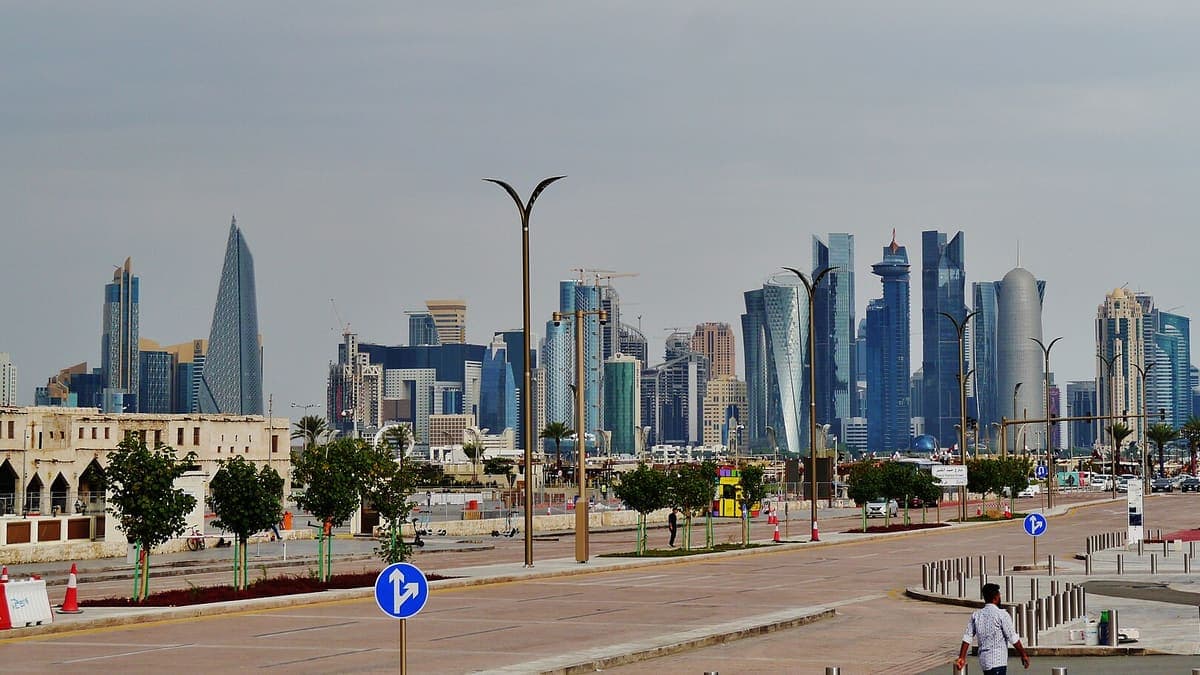
At a glance
Rent, 1-bedroom (centre) — Doha
$1,750
Average net salary — Qatar
$3,300
Processing time — Work residence permit
3–8 weeks
Since 2020 Qatar has removed the No Objection Certificate requirement for changing employer and abolished exit permits for most workers. A minimum wage of QAR 1,000 plus food and accommodation allowances applies regardless of nationality. These are meaningful reforms; enforcement still varies by employer, so the written contract matters.
Main visa routes
Work residence permit
Anyone with an offer from a Qatar-registered employer. The employer secures the entry visa and converts it to a residence permit after medical screening and biometrics.
Permanent residency permit
A capped annual number granted to long-term residents (20 years, or 10 if born in Qatar) with sufficient income and Arabic proficiency. Grants healthcare, education and some ownership rights.
Investor and property residence
Property owners above a qualifying value receive renewable residence for themselves and family, without an employer sponsor.
What you need
- Attested educational certificates for professional roles
- Medical screening and fingerprinting after arrival
- Employment contract registered with the Ministry of Labour
- Health card registration for public healthcare access
- Police clearance from your home country
- Professional licensing for medical, engineering and teaching roles
Residency & legal framework
Permanent residency
A permanent residency permit exists but is capped at a small annual quota and requires twenty years of residence for most applicants, along with Arabic proficiency and adequate income. For nearly everyone, residence remains tied to employment.
Citizenship
Naturalisation is exceptionally restricted and effectively unavailable. Qatar does not permit dual nationality, and even the permanent residency permit does not lead to citizenship.
Legal rights
- You may change employer without a No Objection Certificate after notice.
- Exit permits have been abolished for most private-sector workers.
- A non-discriminatory minimum wage applies to all nationalities.
- Family sponsorship requires a minimum salary and suitable housing.
Labour law essentials
- 48-hour week, 36 during Ramadan, with overtime paid at a premium.
- Minimum three weeks of annual leave, rising with service.
- End-of-service gratuity of at least three weeks' pay per year worked.
- The Wage Protection System requires salaries to be paid into a Qatari bank account.
Cost of living breakdown
Monthly averages for one person in Doha, in US dollars.
| Category | Per month |
|---|---|
| Rent, 1-bedroom (centre) | $1,750 |
| Rent, 1-bedroom (outside centre) | $1,200 |
| Groceries | $300 |
| Utilities | $160 |
| Health insurance | $130 |
| Public transport pass | $80 |
| Internet | $70 |
| Core monthly total | $2,490 |
Job market & qualifications
High-demand industries
- Energy and LNG, the backbone of the economy
- Construction and infrastructure under the National Vision 2030
- Healthcare through Hamad Medical Corporation and private providers
- Education, including international schools and Education City
- Aviation, hospitality and sports event management
Degree recognition
Degrees must be attested by your home authorities and the Qatari embassy. Healthcare professionals license through the Department of Healthcare Professions (QCHP), which requires an exam and verified experience; engineers register with the Ministry of Municipality (MME/UPDA), which grades you by qualification and years of practice.
Average wages
Salaries are tax-free. The statutory minimum is QAR 1,000 plus QAR 300 food and QAR 500 housing allowance where not provided in kind. Engineers commonly earn QAR 15,000–30,000 a month, doctors and specialists considerably more.
Life quality: pros & cons
Housing market
Doha rents are high and, as elsewhere in the Gulf, often payable in several post-dated cheques. Many professional packages include accommodation or a housing allowance — confirm which before comparing an offer with one from Europe.
Language requirements
Arabic is official; English is the working language of business, healthcare and most professional environments. Government portals increasingly offer both.
Integration tips
Register your health card early and use the Metrash2 app for residency, traffic and dependants. Qatar is small and heavily expatriate — around nine in ten residents are foreign — so professional communities form quickly.
What works
- The most far-reaching labour reforms in the Gulf, including job mobility.
- Tax-free income with strong wage-protection enforcement.
- Excellent healthcare and international schooling infrastructure.
- Compact country with a short commute and a large expatriate majority.
What to weigh
- Permanent residency is quota-capped; citizenship is effectively closed.
- Residence and your family's status both end with your job.
- High living costs, particularly rent and schooling.
- Extreme summer heat limits outdoor life for months.
Photo credits
- Doha — Zairon, CC BY 4.0
Compare living costs with your country
Other guides in Gulf
Compare visa routes and living costs across the region.




This is general information, not legal advice. Always confirm details with the official immigration authority before applying.