
Moving to Italy: the quota system, work permits and residency
Updated August 2026
Most Italian work permits are rationed by an annual quota called the Decreto Flussi, which opens for a matter of hours. Missing that window usually means waiting a year, whatever your qualifications.
Quick answer
This guide covers 3 main routes into Italy for work or residence. The primary one is the EU Blue Card (Carta Blu) route, with a processing time of 2–4 months. A one-bedroom in central Milan costs about $1,350 a month, against an average net salary of $1,900. The requirements, fees and timings below are a snapshot reviewed on August 2026; confirm each one with the official immigration authority for Italy before acting.
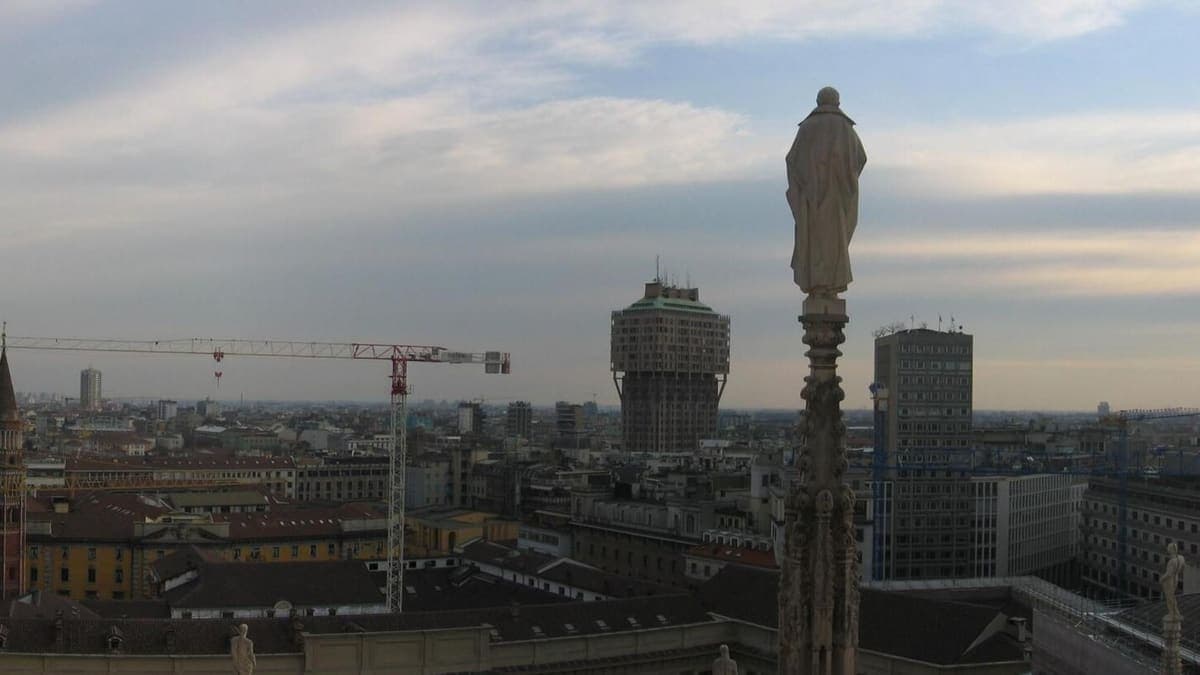
At a glance
Rent, 1-bedroom (centre) — Milan
$1,350
Average net salary — Italy
$1,900
Processing time — EU Blue Card (Carta Blu)
2–4 months
Italy splits its routes in two. Quota-based permits cover most employment and are released on a click-day each year against a fixed national allocation. Outside the quota sit the EU Blue Card, intra-company transfers, research and self-employment in special categories — these can be applied for at any time, which makes them far more reliable if you qualify.
Main visa routes
EU Blue Card (Carta Blu)
Graduates or holders of five years' professional experience with a job offer above the salary threshold. Outside the quota, so no click-day, and it is the most dependable skilled route into Italy.
Decreto Flussi work permit
Seasonal and non-seasonal workers in construction, tourism, transport, agriculture and care. Your employer must file the moment the portal opens; allocations are exhausted within hours.
Study and post-study conversion
Students may work 20 hours a week and convert to a work permit on graduation without touching the quota — the most reliable back door into the Italian labour market.
What you need
- Nulla osta work authorisation obtained by your employer before the visa
- Codice fiscale tax code, required for a contract, a lease or a bank account
- Permesso di soggiorno application within eight days of arrival
- Proof of suitable accommodation, certified by the local authority
- Health cover through the SSN registration or private insurance
- Declared and apostilled qualifications for regulated professions
Residency & legal framework
Permanent residency
The permesso di soggiorno UE per soggiornanti di lungo periodo comes after five years of legal residence, with adequate income and a proven A2 level of Italian. It has no expiry for work purposes, though the card is reissued periodically.
Citizenship
Ten years of continuous residence for non-EU nationals, reduced to four for EU citizens and three for those with an Italian parent or grandparent. B1 Italian is required. Italy permits dual nationality, and descent-based claims (jure sanguinis) bypass residency entirely.
Legal rights
- Dual nationality is permitted without restriction.
- Family reunion is available once you hold a permit valid for at least a year.
- Long-term permit holders may move to other EU states more easily.
- Descent-based citizenship remains open to many with Italian ancestry.
Labour law essentials
- 40-hour week with four weeks of paid leave and 12 public holidays.
- A thirteenth-month salary is standard and often a fourteenth in some sectors.
- TFR severance accrues throughout employment and is paid when you leave.
- National collective agreements (CCNL) set pay and conditions per sector.
Cost of living breakdown
Monthly averages for one person in Milan, in US dollars.
| Category | Per month |
|---|---|
| Rent, 1-bedroom (centre) | $1,350 |
| Rent, 1-bedroom (outside centre) | $950 |
| Groceries | $290 |
| Utilities | $190 |
| Health insurance | $60 |
| Public transport pass | $42 |
| Internet | $30 |
| Core monthly total | $1,962 |
Job market & qualifications
High-demand industries
- Manufacturing and mechanical engineering across the northern regions
- Tourism and hospitality, seasonal and very large
- Elderly care — badanti work is a major regularised migrant sector
- Agriculture and food processing in the south
- Fashion, design and logistics around Milan
Degree recognition
Regulated professions require riconoscimento from the relevant ministry — health qualifications through the Ministry of Health, teaching through the Ministry of Education. It is document-heavy and slow. For everything else a Dichiarazione di Valore from the Italian consulate in your country, or a CIMEA statement, is usually what employers and universities want.
Average wages
Italy has no statutory minimum wage; pay floors come from sector agreements instead. Engineers start near €28,000–35,000 gross, developers €30,000–45,000, and the north pays substantially more than the south for identical work.
Life quality: pros & cons
Housing market
Milan is the expensive outlier; Rome, Turin and Bologna cost noticeably less, and the south less again. Landlords commonly want a payslip and a guarantor, and contracts follow fixed formats (4+4 or 3+2 years) that are worth understanding before signing.
Language requirements
Italian is necessary almost everywhere. English-only workplaces exist in Milan finance and a handful of multinationals, but public administration, healthcare and most employers operate in Italian only.
Integration tips
Register with the anagrafe for residency and enrol in the SSN for a family doctor — health cover is broad and cheap once you are in. CPIA centres run free state Italian courses that also satisfy the A2 requirement for the long-term permit.
What works
- Healthcare is comprehensive and among the cheapest in western Europe.
- Living costs outside Milan are low for a western European country.
- Established migrant communities and well-trodden regularisation routes.
- Ancestry-based citizenship is open to a large diaspora.
What to weigh
- The quota system makes most work permits a lottery with a fixed date.
- Wages are low and youth unemployment in the south is severe.
- Bureaucracy is slow even by regional standards.
- Ten years to citizenship is among the longest in the EU.
Photo credits
- Milan — Lauri Kangas from Espoo, Finland, CC BY-SA 2.0
Compare living costs with your country
Other guides in Southern Europe
Compare visa routes and living costs across the region.


This is general information, not legal advice. Always confirm details with the official immigration authority before applying.