
Moving to Austria: the Red-White-Red Card and residency
Updated August 2026
Austria runs a transparent points system called the Red-White-Red Card. You can score yourself before applying, which makes it one of the few European routes where you know your odds in advance.
Quick answer
This guide covers 3 main routes into Austria for work or residence. The primary one is the RWR Card — shortage occupation route, with a processing time of 8–12 weeks. A one-bedroom in central Vienna costs about $1,050 a month, against an average net salary of $2,600. The requirements, fees and timings below are a snapshot reviewed on August 2026; confirm each one with the official immigration authority for Austria before acting.
At a glance
Rent, 1-bedroom (centre) — Vienna
$1,050
Average net salary — Austria
$2,600
Processing time — RWR Card — shortage occupation
8–12 weeks
Points come from qualifications, work experience, language skills (German and English both count) and age. Different categories have different thresholds, and the shortage-occupation category is the easiest to clear because it needs only a job offer in a listed profession plus the minimum score.
Main visa routes
RWR Card — shortage occupation
Anyone with a job offer in a profession on the annual shortage list — currently heavy with engineering, IT, healthcare and skilled trades — who scores at least 55 of 90 points.
RWR Card — very highly qualified
Applicants scoring at least 70 of 100 points may enter on a six-month job seeker visa without an offer in hand, then convert once hired.
Graduate of an Austrian institution
Graduates may stay twelve months to find work and face a lower salary threshold than other applicants — the smoothest route into the Austrian market.
What you need
- Points score meeting the threshold for your chosen category
- Qualifications assessed and, where required, formally recognised
- Job offer meeting the minimum salary for the category
- Health insurance covering all risks in Austria
- Proof of accommodation considered adequate for household size
- Meldezettel residence registration within three days of arrival
Residency & legal framework
Permanent residency
The Daueraufenthalt-EU permit follows five years of legal residence with stable income, health insurance and German at B1 under Module 2 of the Integration Agreement.
Citizenship
Ten years of residence, or six with strong integration. Austria is strict: applicants normally must renounce their previous nationality, and the income requirement is high and sustained.
Legal rights
- Dual nationality is generally NOT permitted — most naturalising applicants must renounce.
- The RWR Card Plus, available after two years, removes the tie to one employer.
- Family members can apply for a Red-White-Red Card Plus with full labour access.
- The Integration Agreement makes German milestones a legal condition, not advice.
Labour law essentials
- 38.5–40 hour week with five weeks of paid leave.
- Thirteenth and fourteenth salaries are standard and taxed at a low rate.
- Collective agreements cover almost the entire workforce.
- Chamber of Labour membership is automatic and provides free legal advice.
Cost of living breakdown
Monthly averages for one person in Vienna, in US dollars.
| Category | Per month |
|---|---|
| Rent, 1-bedroom (centre) | $1,050 |
| Rent, 1-bedroom (outside centre) | $780 |
| Groceries | $300 |
| Utilities | $210 |
| Health insurance | $200 |
| Public transport pass | $45 |
| Internet | $30 |
| Core monthly total | $1,835 |
Job market & qualifications
High-demand industries
- Mechanical and electrical engineering
- IT, especially software development and data
- Healthcare and nursing, on the shortage list for years
- Tourism and hospitality, strongly seasonal in the Alps
- International organisations based in Vienna
Degree recognition
ENIC-NARIC Austria issues comparability assessments, and the AST advisory centres help migrants navigate recognition free of charge. Regulated professions — health, law, teaching, many trades — need Nostrifizierung, which is slow and may require supplementary examinations.
Average wages
Median gross pay is roughly €3,200 a month across fourteen payments. Engineers start near €42,000–48,000 a year and developers €45,000–60,000. Vienna dominates the professional market; the Alpine west is seasonal and hospitality-heavy.
Life quality: pros & cons
Housing market
Vienna is the outlier in Europe: around a quarter of the city lives in municipal or subsidised housing, which holds private rents down. It is consistently the most affordable major western European capital for the quality of life on offer.
Language requirements
German is required for most jobs and legally required for residency milestones. English works in international organisations, tourism and some tech, but the Integration Agreement means you cannot indefinitely avoid German.
Integration tips
Module 1 of the Integration Agreement (A2 German plus a values course) must be completed within two years, and Module 2 (B1) unlocks permanent residence. ÖIF subsidises the courses. Register your address within three days — the deadline is short and enforced.
What works
- A transparent points test you can score yourself before applying.
- Vienna combines high quality of life with unusually affordable rent.
- Fourteen salary payments a year, with the extra two lightly taxed.
- Strong healthcare and near-free public universities.
What to weigh
- Dual nationality is effectively barred for most naturalising applicants.
- German requirements are legal obligations with deadlines attached.
- Ten years to citizenship, with a demanding income test.
- The professional job market outside Vienna is thin.
Photo credits
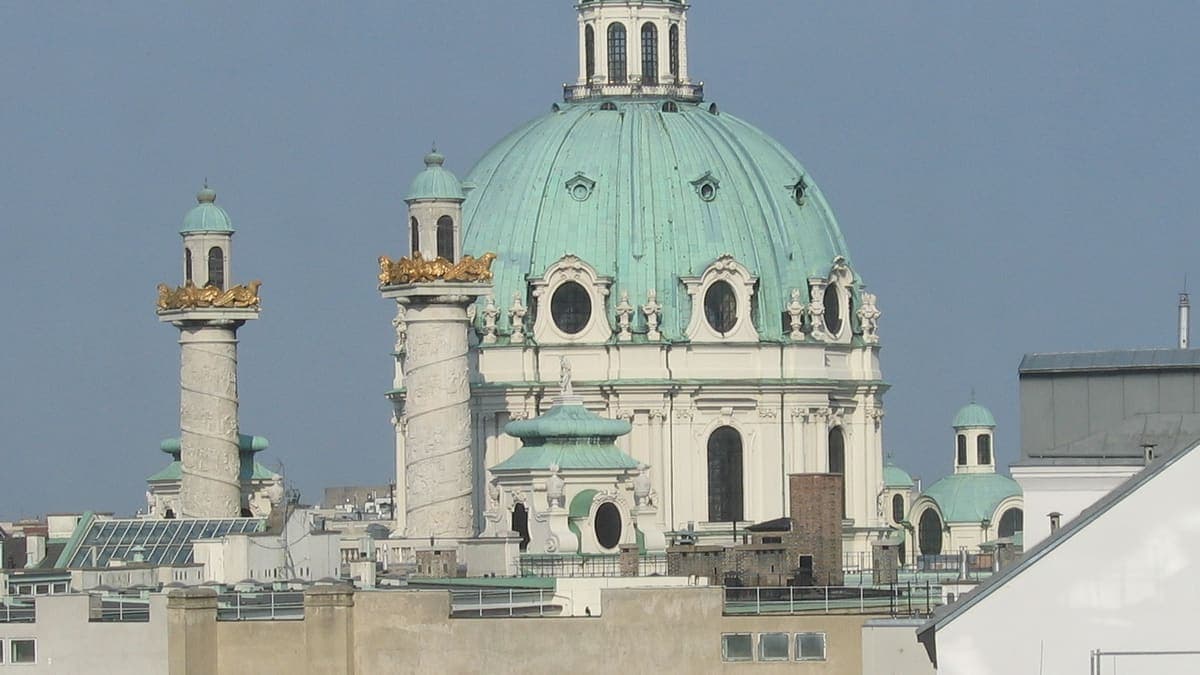
- Vienna — Schmock, CC BY-SA 3.0
Compare living costs with your country
Other guides in Central Europe
Compare visa routes and living costs across the region.

This is general information, not legal advice. Always confirm details with the official immigration authority before applying.