
Moving to Switzerland: quotas, permits and the highest wages in Europe
Updated August 2026
Switzerland pays more than anywhere else in Europe and admits fewer non-EU workers than almost anywhere else. Permits are capped by federal quota and your employer must prove nobody in Switzerland or the EU could do the job.
Quick answer
This guide covers 3 main routes into Switzerland for work or residence. The primary one is the B permit — qualified third-country national route, with a processing time of 2–4 months across cantonal and federal stages. A one-bedroom in central Zurich costs about $2,400 a month, against an average net salary of $6,200. The requirements, fees and timings below are a snapshot reviewed on August 2026; confirm each one with the official immigration authority for Switzerland before acting.
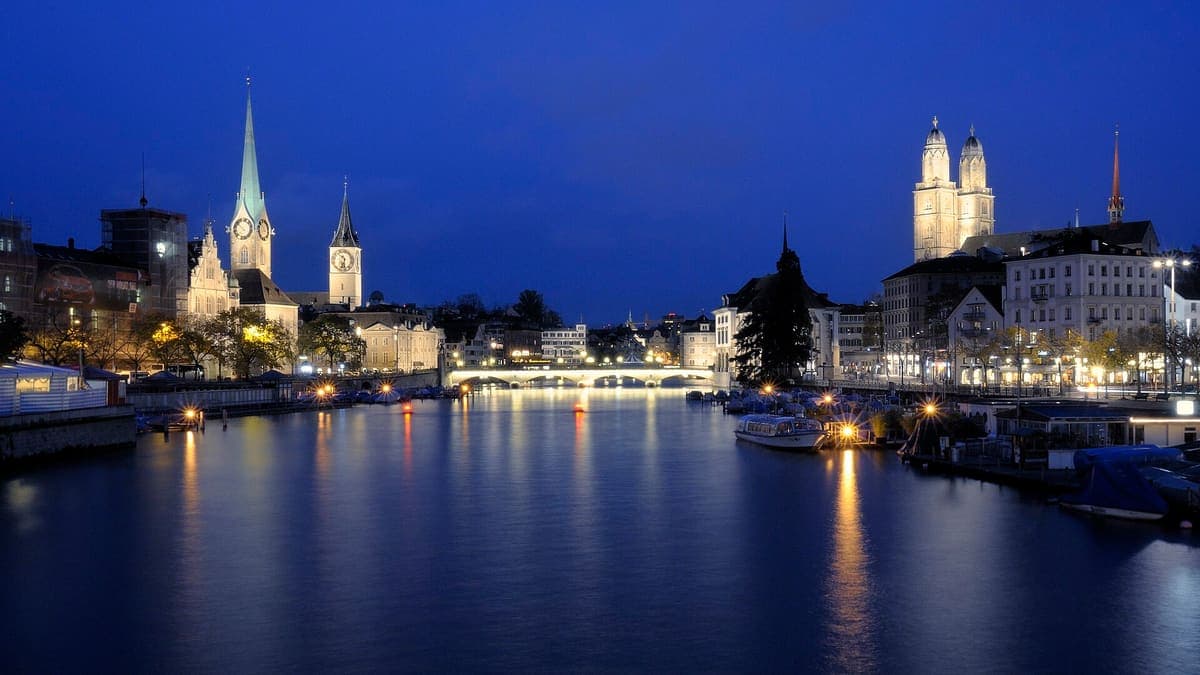
At a glance
Rent, 1-bedroom (centre) — Zurich
$2,400
Average net salary — Switzerland
$6,200
Processing time — B permit — qualified third-country national
2–4 months across cantonal and federal stages
For third-country nationals this is one of Europe's hardest markets to enter and one of its most rewarding to be in. Admission is restricted to managers, specialists and the highly qualified, the annual quota is small, and cantons administer it individually. Salaries and the quality of public services are the compensation.
Main visa routes
B permit — qualified third-country national
Managers, specialists and university graduates with proven experience, hired at local market pay. Counted against the federal quota and tied initially to one canton and employer.
L permit — short-term
Assignments under 12 months, including project work and intra-company transfers. Convertible to a B permit in some cantons, but not guaranteed.
Student permit and post-study stay
Students at Swiss universities may work 15 hours a week and stay six months after graduating to find qualifying work. Graduates of Swiss institutions are exempt from part of the labour market test.
What you need
- Employer proof that no Swiss or EU candidate was available
- Salary and conditions matching local market rates for the role
- Recognised university degree or equivalent professional record
- Mandatory Swiss health insurance within three months of arrival
- Registration with the commune within 14 days
- Available place in the annual federal quota
Residency & legal framework
Permanent residency
The C settlement permit normally comes after ten years for third-country nationals, or five with strong integration and language proof. It removes the link to employer and canton and is close to unconditional.
Citizenship
Ten years of residence including a C permit, plus cantonal and communal residence conditions, a language level set locally (usually B1 spoken, A2 written) and an integration assessment. Switzerland permits dual nationality.
Legal rights
- Dual nationality is permitted.
- B permit holders need approval to change canton in the first year.
- Family reunion is available but requires adequate housing and income.
- Naturalisation decisions involve your commune, not just the federal state.
Labour law essentials
- Typical week is 40–42 hours; the legal maximum is 45–50 by sector.
- Four weeks of paid leave is the statutory minimum; five is common.
- There is no national minimum wage; a few cantons set their own.
- Notice periods are short and dismissal protection is comparatively weak.
Cost of living breakdown
Monthly averages for one person in Zurich, in US dollars.
| Category | Per month |
|---|---|
| Rent, 1-bedroom (centre) | $2,400 |
| Rent, 1-bedroom (outside centre) | $1,850 |
| Groceries | $550 |
| Utilities | $230 |
| Health insurance | $400 |
| Public transport pass | $90 |
| Internet | $55 |
| Core monthly total | $3,725 |
Job market & qualifications
High-demand industries
- Pharmaceuticals and life sciences around Basel
- Banking, insurance and asset management in Zurich and Geneva
- Precision engineering, watchmaking and medtech
- IT, data and quantitative research
- International organisations and diplomacy in Geneva
Degree recognition
SERI (SBFI) handles recognition of foreign qualifications and is the starting point for regulated professions. Medical and nursing recognition is demanding and language-gated by canton. For unregulated roles Swiss employers weigh experience and references far more heavily than formal equivalence.
Average wages
Median pay is around CHF 6,800 gross a month. Engineers and developers commonly earn CHF 100,000–150,000 a year, and finance more. Income tax is low by European standards but health insurance is a private, unavoidable and substantial monthly cost.
Life quality: pros & cons
Housing market
Zurich and Geneva have vacancy rates near 1% and applications are competitive — expect to submit a dossier with a debt-collection extract. Deposits of three months are standard and held in a blocked account.
Language requirements
Four national languages, and which one matters depends entirely on the canton: German in Zurich and Basel, French in Geneva and Lausanne, Italian in Ticino. Multinationals run in English, but naturalisation and daily services do not.
Integration tips
Health insurance is compulsory, private and chosen by you — compare providers, because premiums vary widely for identical statutory cover. Communes run subsidised language courses and expect participation as part of the integration record that naturalisation later depends on.
What works
- The highest net salaries in Europe by a wide margin.
- Low income tax and excellent public infrastructure.
- Outstanding healthcare quality and short waiting times.
- Central European location with superb transport.
What to weigh
- Federal quotas make third-country hiring genuinely scarce.
- Living costs, especially rent and insurance, are the highest in Europe.
- Ten years to citizenship, with communal approval on top.
- Social integration is slow and often described as closed.
Photo credits
- Zurich — sdh_zh, CC BY 2.0
Compare living costs with your country
Other guides in Western Europe
Compare visa routes and living costs across the region.




This is general information, not legal advice. Always confirm details with the official immigration authority before applying.