
Moving to Belgium: single permits, regions and residency
Updated August 2026
Belgium issues one combined work-and-residence permit, but the rules are set by three regions rather than the federal government — Flanders, Wallonia and Brussels each have their own salary thresholds and shortage lists.
Quick answer
This guide covers 3 main routes into Belgium for work or residence. The primary one is the Single permit (highly skilled) route, with a processing time of 6–16 weeks. A one-bedroom in central Brussels costs about $1,100 a month, against an average net salary of $2,700. The requirements, fees and timings below are a snapshot reviewed on August 2026; confirm each one with the official immigration authority for Belgium before acting.
At a glance
Rent, 1-bedroom (centre) — Brussels
$1,100
Average net salary — Belgium
$2,700
Processing time — Single permit (highly skilled)
6–16 weeks
Which region your employer is registered in decides your salary threshold, your paperwork and how quickly you are approved. Brussels is bilingual and hosts the EU institutions, Flanders runs in Dutch and has the strongest labour market, Wallonia runs in French and is cheaper to live in. Check the region before you check anything else.
Main visa routes
Single permit (highly skilled)
Degree holders with a job offer above the regional threshold — roughly €48,000–52,000 a year depending on region and age. One application covers both work and residence.
EU Blue Card
Graduates on a contract of at least a year above the Blue Card threshold. Adds mobility rights across the EU that the single permit does not carry.
Student and orientation year
Students may work 20 hours a week, and graduates of a Belgian institution get a 12-month search year to find qualifying work or launch a business.
What you need
- Job offer from an employer registered in a Belgian region
- Legalised and translated diploma, and a medical certificate
- Criminal record certificate covering the last five years
- Registration at your commune within eight days of arrival
- Enrolment with a mutuelle health fund
- Proof the salary meets the region's threshold for your category
Residency & legal framework
Permanent residency
Unlimited residence (F/K card) follows five years of continuous legal stay with stable income. Blue Card holders can count time spent in other EU states toward the total, which few other routes allow.
Citizenship
Five years of legal residence, proof of economic participation, social integration and knowledge of one of the three national languages at A2. Belgium allows dual nationality.
Legal rights
- Dual nationality is permitted without restriction.
- Spouses of single-permit holders receive full work rights.
- After 12 months you may change employer within the same region.
- EU institution staff follow a separate, more generous special-status regime.
Labour law essentials
- 38-hour week, 20 days of statutory leave and 10 public holidays.
- Holiday pay and a thirteenth month are standard in most sectors.
- Notice periods scale with seniority and are strictly enforced.
- Meal vouchers and transport reimbursement are near-universal benefits.
Cost of living breakdown
Monthly averages for one person in Brussels, in US dollars.
| Category | Per month |
|---|---|
| Rent, 1-bedroom (centre) | $1,100 |
| Rent, 1-bedroom (outside centre) | $850 |
| Groceries | $300 |
| Utilities | $220 |
| Health insurance | $130 |
| Public transport pass | $55 |
| Internet | $45 |
| Core monthly total | $1,850 |
Job market & qualifications
High-demand industries
- EU institutions, NGOs and international policy work in Brussels
- Pharmaceuticals and life sciences, a Belgian speciality
- Logistics around the port of Antwerp
- IT and cybersecurity across all three regions
- Construction and technical trades on the shortage lists
Degree recognition
Recognition is regional: NARIC Vlaanderen for Flanders, the French Community service for Wallonia and Brussels. Regulated health professions go through the FPS Health. Apply to the region where you will actually work — a Flemish equivalence does not automatically transfer.
Average wages
The national minimum is around €2,070 gross a month. Engineers and developers start near €42,000–50,000 and reach €70,000 with experience. Belgium's tax and social-security wedge is one of Europe's heaviest — budget on net, never on gross.
Life quality: pros & cons
Housing market
Brussels is comfortably cheaper than Amsterdam or Paris for comparable space, and rental supply is reasonable. Registration at the commune triggers a police visit to confirm you live at the address — routine, but it surprises people.
Language requirements
Brussels functions in French with English widely spoken; Flanders expects Dutch and Wallonia French. English alone is viable in the EU bubble and international firms, and limiting almost everywhere else.
Integration tips
Flanders requires a formal inburgering integration course; the French Community has a lighter equivalent. Both are free, count toward citizenship, and include language tuition. Join a mutuelle early — it is how healthcare reimbursement works.
What works
- Central location with fast rail to Paris, Amsterdam, Cologne and London.
- Five years to citizenship, shorter than most neighbours.
- Strong international job market concentrated in one small city.
- Housing is affordable relative to salaries.
What to weigh
- Among the highest effective tax burdens in Europe.
- Three-region bureaucracy duplicates rules and paperwork.
- Language politics affect jobs, schooling and services.
- Weather is grey and wet for much of the year.
Photo credits
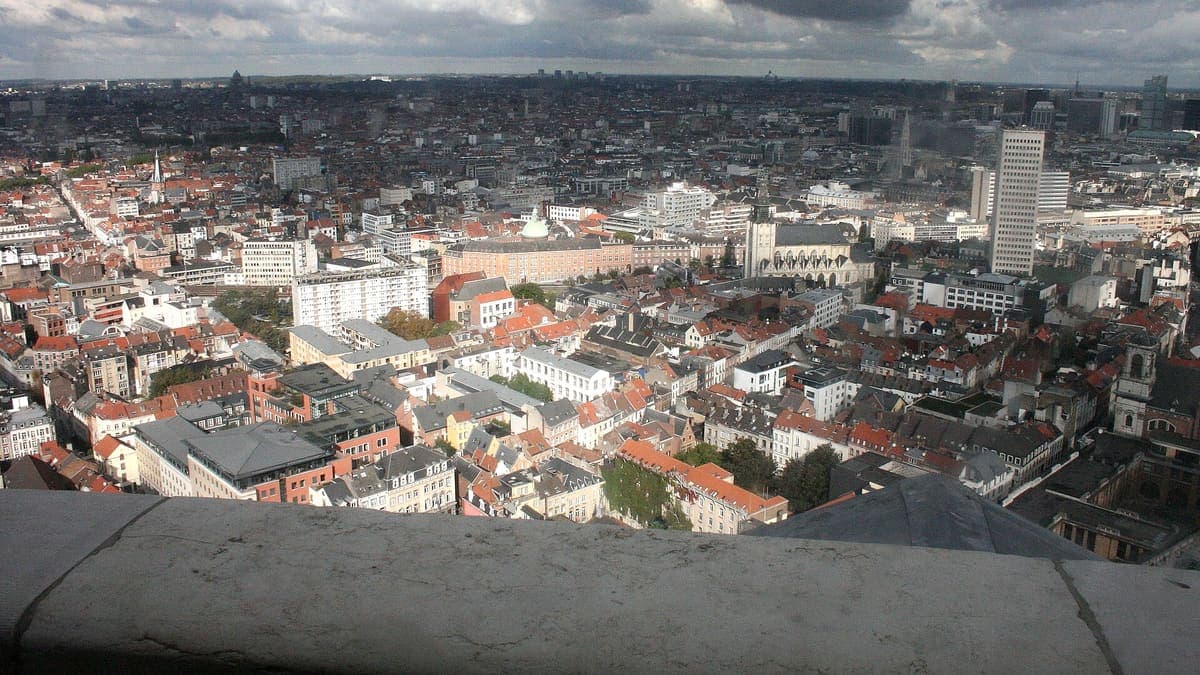
- Brussels — Michel wal, CC BY-SA 3.0
Compare living costs with your country
Other guides in Western Europe
Compare visa routes and living costs across the region.




This is general information, not legal advice. Always confirm details with the official immigration authority before applying.